Are you deciding between Beverly Hills and West Hollywood? You want the right mix of design, privacy, daily convenience, and access to culture. That choice shapes how you live each day, from your morning coffee to your evening plans. In this guide, you’ll see how each area feels, how homes differ, and what day-to-day life actually looks like so you can choose with confidence. Let’s dive in.
Quick snapshot: two distinct lifestyles
- Beverly Hills: private estates, polished luxury retail, calm residential streets, and discreet hospitality.
- West Hollywood: walkable, social, nightlife-forward, with visible creative energy and design culture.
Neighborhood feel and daily rhythm
Beverly Hills: refined and residential
Beverly Hills centers on a quiet, luxury-residential experience, with energy concentrated in the Golden Triangle and along Wilshire, Robertson, and Melrose. Residential pockets feel calm during the day and remain low-key in the evening. You see a strong emphasis on privacy, fine dining, luxury hotels, and showroom-style shopping.
Neighborhood snapshots you will hear often include the Beverly Hills Flats for broad, tree-lined streets, Trousdale for view-rich modern estates, and Beverly Hills Post Office along the hills for seclusion. Expect a polished, resort-like tone in many pockets.
West Hollywood: vibrant and urban
West Hollywood is dense and cosmopolitan, with active street life from morning to late night. Santa Monica Boulevard, the Sunset Strip, and parts of Melrose and La Cienega pulse with cafes, boutiques, galleries, and nightlife. The vibe skews younger and more creative, with a visible LGBTQ+ community and a design-forward scene.
You will hear about the Sunset Strip for entertainment, the Norma Triangle for a tucked-in neighborhood feel near Santa Monica Boulevard, and the Melrose and La Cienega corridors for design showrooms and galleries. Expect energy, variety, and constant discovery.
Homes and design potential
Beverly Hills: estate scale and custom architecture
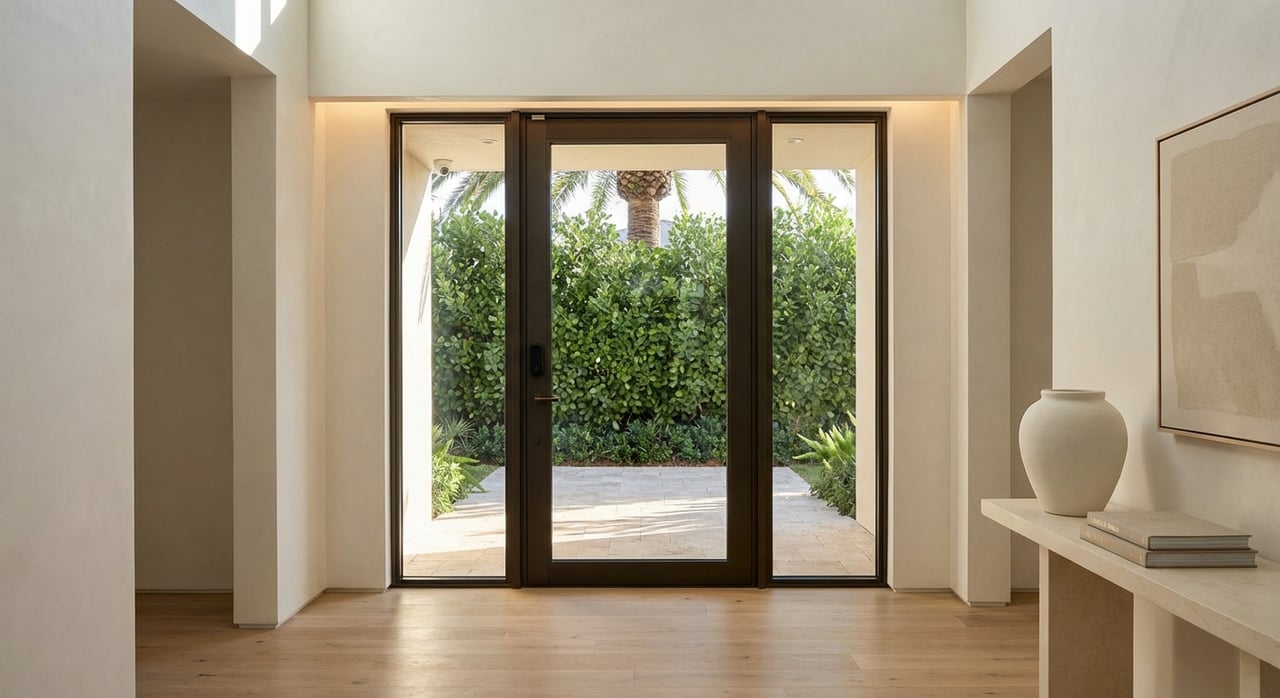
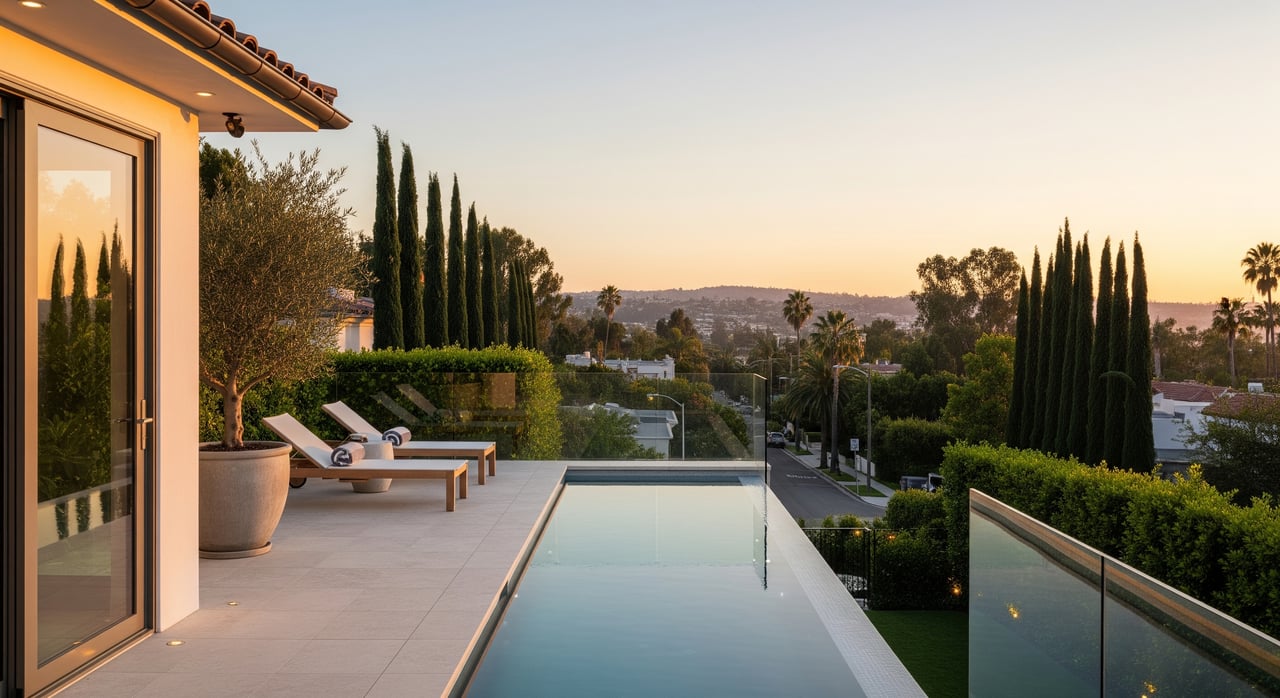
Beverly Hills is dominated by single-family homes on larger lots. You see Mediterranean and Spanish Colonial classics, traditional mansions, and a growing inventory of contemporary architect-designed estates. Large parcels support gated entries, long setbacks, tall hedges, and dramatic indoor-outdoor spaces.
If you want ceiling height, gallery-scale walls for art, privacy landscaping, and room to commission top-tier architecture, Beverly Hills offers the canvas. Design reviews can be stringent, especially for visible street-facing changes, which helps preserve the area’s refined streetscape.
West Hollywood: boutique scale and curated interiors
West Hollywood features condos, mid-rise apartments, townhomes, and smaller-lot single-family homes in limited areas. Architectural styles often include Mid-Century Modern and Art Deco, plus contemporary boutique developments. Interiors tend to be highly curated, with modern finishes and smart layouts that favor light, materials, and flow over estate-scale square footage.
If you prioritize noteworthy mid-century condos or stylish new-builds with strong design DNA, WeHo offers excellent options. Zoning is often more permissive along key corridors, which supports mixed-use projects and adaptive re-use.
Walkability, mobility, and parking
West Hollywood is generally more walkable, especially around Santa Monica Boulevard, Melrose Avenue, and near West Hollywood Park and Sunset Plaza. Daily errands, dining, and fitness are often a short walk away. To explore current walkability data, review area snapshots on Walk Score.
Beverly Hills has very walkable nodes like Rodeo Drive, Beverly Drive, and South Beverly Drive, but residential neighborhoods are more car-oriented. Both areas have strong bus service along major corridors. Many high-net-worth buyers rely on private cars, chauffeurs, or ride-hailing for regular mobility.
Parking is a key difference. Beverly Hills homes often provide private garages and longer driveways, which simplifies guest access. West Hollywood’s denser fabric can mean permit zones and more competition for street parking, especially near nightlife corridors.
Dining, shopping, nightlife, and design sourcing
Beverly Hills: polished luxury and privacy
Shopping centers on internationally known luxury brands, curated boutiques, and jewelry and design showrooms. Dining leans reservation-driven and refined, including hotel scenes that deliver a quieter, private experience. Nightlife exists but is focused in select hotel bars and restaurants rather than high-density late-night corridors.
West Hollywood: variety and discovery
West Hollywood offers a wide range of dining, from approachable trendy concepts to celebrated chef spots, plus a robust cocktail bar and late-night scene on the Sunset Strip. The Melrose and La Cienega corridors host showrooms, galleries, and vintage and modern design stores that many interior designers frequent. For a feel for architectural context and preservation culture across Los Angeles, explore the Los Angeles Conservancy.
Privacy, security, and lifestyle services
Beverly Hills places a premium on privacy. You will find gated estates, long setbacks, and mature hedges. Concierge-level security services are common. The city’s public safety and municipal information can be reviewed through official resources. West Hollywood provides privacy at the building level through controlled entries and private elevators, though the urban fabric means more public street life. You can explore city programs and public safety updates on the City of West Hollywood’s official site.
Both neighborhoods support top-tier lifestyle services such as private chefs, estate managers, art logistics, and specialty contractors. Beverly Hills offers more white-glove hospitality tied to luxury hotels, while WeHo trends boutique and creative.
Schools and family considerations
Beverly Hills is served by the Beverly Hills Unified School District. For official information on programs and enrollment, visit the BHUSD website. West Hollywood generally falls under Los Angeles Unified School District in many areas, along with a range of private and charter options; you can review district resources via LAUSD. If schools are central to your decision, compare commute patterns, extracurricular access, and nearby private options before you commit.
Single-family homes with larger yards and private outdoor spaces are more typical in Beverly Hills. West Hollywood is less focused on large-lot family living, but offers convenience, walkability, and access to creative amenities that some households prefer.
Market dynamics and resale
Beverly Hills tends to have fewer transactions but includes trophy sales that set benchmarks. Well-located, well-designed estates attract global buyers and can hold long-term appeal, while still responding to broader luxury-market conditions. West Hollywood’s market includes more condos and mid-rise units, which creates more transactional volume in the entry to mid-luxury bands. Architectural provenance, boutique developers, and mid-century pedigree can support resale value.
Short-term rentals are regulated in both cities and rules can change. Review current policies on each city’s official channels, including the City of West Hollywood’s website, and consult legal advisors as needed before you plan any income strategy.
How to evaluate homes like a design pro
- Scale and volume: In Beverly Hills, weigh ceiling heights, gallery walls, and the ability to host art and large furnishings. In West Hollywood, study layout efficiency and natural light to maximize experience per square foot.
- Privacy by design: Consider hedging, setbacks, and sightlines in Beverly Hills. In WeHo, review building orientation, elevator access, and corridor privacy.
- Renovation scope: Expect more design review for visible changes in Beverly Hills. In WeHo, corridor projects and adaptive re-use occur more often, so assess HOA and city guidelines early.
- Parking and guest flow: In Beverly Hills, verify garage capacity and on-site guest parking. In WeHo, confirm assigned spaces, EV readiness, and permit logistics.
- Daily routine: Map your breakfast spots, fitness, design sourcing, and school or office routes. Use walkability tools like Walk Score to test real-life convenience.
A day in each location
- Beverly Hills morning: Coffee and errands near Beverly or Rodeo, then back to a quiet, private estate setting to work or host a meeting. Afternoon design appointments at showrooms or in the La Cienega corridor, then dinner at a reservation-only spot or hotel dining room.
- West Hollywood morning: Walk to a favorite cafe on Santa Monica Boulevard or Melrose, then a short stroll to a fitness class. Afternoon gallery or design browsing near La Cienega, then an evening on the Sunset Strip or a new chef-driven restaurant within minutes on foot.
Which fits you best?
Choose Beverly Hills if you value estate-scale living, privacy, and polished hospitality. Choose West Hollywood if you want walkability, design-forward condo life, and an energetic, social rhythm. Both deliver excellent access to greater Westside hubs, strong lifestyle services, and a deep bench of design talent.
When you are ready to compare specific homes, review municipal resources for planning, permitting, and public safety updates. Start with the City of West Hollywood for WeHo insights, and use district sites like BHUSD and LAUSD to confirm current school information. For design history and context across Los Angeles, the Los Angeles Conservancy is a helpful reference.
Ready for curated, private guidance across both markets? Schedule a confidential conversation with The Alexander Group to compare neighborhoods, tour off-market and on-market options, and align your decision with the way you live.
FAQs
What is the main lifestyle difference between Beverly Hills and West Hollywood?
- Beverly Hills is quieter and privacy-focused, while West Hollywood is more walkable, social, and nightlife-forward.
How does walkability compare if I want to run daily errands on foot?
- West Hollywood offers broader walkability across key corridors, while Beverly Hills is walkable in retail nodes but more car-oriented in residential areas.
What types of homes dominate in each area for design-focused buyers?
- Beverly Hills features larger single-family estates suited to custom architecture; West Hollywood offers boutique condos, mid-rises, and curated interiors.
How do schools factor into a move to these areas?
- Beverly Hills is served by BHUSD and many private options; parts of West Hollywood fall under LAUSD, with nearby private and charter choices to review.
What should I know about privacy and security when comparing neighborhoods?
- Beverly Hills often delivers gated estates and long setbacks; West Hollywood focuses on building-level access controls within a more urban street environment.
Are short-term rentals allowed in Beverly Hills or West Hollywood?
- Both cities regulate short-term rentals, so you should review current rules on each city’s official channels before planning any income strategy.